
TRAUMA THERAPY - SOUTH CAROLINA
Trauma therapy for accomplished professionals in South Carolina
You show up composed, you say the right thing at the right moment and everyone around you assumes you have it figured out. What they don’t see is what it costs you to keep that up. The bracing before a phone call you already know will leave you drained. The quiet exhaustion of being the person everyone else leans on.
You’re not broken and you’re not imagining this. What you’re carrying has a name and it responds well to the right kind of treatment.

DOES THIS SOUND FAMILIAR?
You've built a life that looks put together
Something underneath still feels unsettled
There’s a particular kind of tired that comes from years of managing everyone’s comfort but your own. You’ve gotten good at it. Maybe too good. From the outside, you’re the reliable one, the gracious one. On the inside, you’re running a constant assessment of the room, the relationships, trying to stay one step ahead of conflict before it starts.
You might relate to this if:
- You find yourself smiling and nodding through a conversation that’s actually upsetting you because keeping the peace feels safer than saying so.
- You apologize reflexively, even when you’ve done nothing wrong, just to soften the air around you.
- You feel a specific kind of dread before family visits or holiday gatherings, the kind that starts building days, weeks in advance.
- You’ve mastered the art of saying things diplomatically so no one gets defensive, even when what you actually want is to be direct.
- You feel emotionally wrung out after time with people who are supposed to be safe to be around.
- You tell yourself you should be handling this better and that other people have real problems, dismissing your feelings.
- You notice you’re more comfortable taking care of everyone else’s needs than naming your own.
These aren’t flaws in your character. They’re patterns you built for a good reason. Because you learned a long time ago that staying agreeable felt like the only safe option. They made sense back then.
At Healing Hearts Counseling, you’re allowed to stop now and you’ll be shown how to.
UNDERSTANDING TRAUMA
It doesn't have to look like a crisis to count
When people hear the word trauma, they often picture something dramatic. A car accident. A natural disaster. A mass shooting incident. These are real and they matter and if you’ve lived through something like this, it deserves focused, careful treatment. Clinically, we call this “Big T” trauma, a distinct event that overwhelms your ability to cope in the moment.
But trauma isn’t only defined by the size of the event. It can also come from what happened over and over, quietly, for years. Being told you were too sensitive. Being praised only when you behaved as expected. Learning that your needs were an inconvenience, so you stopped voicing them. Growing up in a home where love felt conditional on how well you managed everyone else’s mood. None of these moments would show up on a list of traumatic events. Individually, they might not even register as painful. But repeated enough times, they shape how your nervous system reads the world. This is “little t” trauma, and it’s just as capable of driving anxiety, people pleasing, chronic self doubt, and the exhausting habit of staying two steps ahead of everyone else’s needs.
Most of the professionals I work with have never used the word trauma to describe what they’ve been through. They’ve called it a difficult childhood. A complicated family. Just how things were. That language can keep the actual impact hidden, even from yourself, especially when you’ve built a successful, capable life on top of it.
You don’t need a single defining event to justify getting support. If old patterns are still running your present, that’s reason enough to investigate trauma therapy. You can also learn more about other online therapy services I offer in South Carolina.
WHO THIS WORK IS FOR ACROSS SOUTH CAROLINA
Trauma shows up differently depending on where you've built your life
Charleston and the Lowcountry
Charleston carries a strong military presence and with it, a particular kind of household resilience. If you’re a military spouse or someone connected to that world, you know what it means to hold a family together through deployments, relocations and long stretches of uncertainty, often without much room to fall apart yourself. There’s an unspoken expectation that you’ll manage it and keep the household running regardless of what it costs you internally. Add in Charleston’s genteel Southern culture, where grace and hospitality are practically civic values, and you get a place where emotional composure isn’t just personal, it’s expected. Many of the professionals and spouses I work with in the Charleston area learned early that falling apart wasn’t an option and that lesson doesn’t just disappear once the circumstances change.
Greenville and the Upstate
Greenville has grown fast, pulled in by companies like BMW, Michelin and a wave of corporate relocations that brought a new professional class into the Upstate. If you moved here for the job, you might carry a specific kind of tension: gratitude for the opportunity sitting right next to a quiet sense of not quite belonging yet. Building a new professional identity in an unfamiliar city, without the informal support network you may have had elsewhere, can surface old patterns of over-functioning and self-reliance, especially if you learned early on that competence was the safest way to earn your place.
Columbia and the Midlands
Columbia is a city built around institutions, state government, higher education and law, and institutions come with their own culture of composure. If you work in this world, you’ve likely learned to manage your reactions carefully and to keep personal struggles separate from your professional face. That skill serves you well at work. It becomes a problem when it’s the only mode you know how to operate in, even at home, even with the people who are supposed to see the real you.
Wherever you are in South Carolina, if you recognize yourself in any of this, the pattern is treatable. It doesn’t require you to explain your whole history to get started.
HOW HEALING HAPPENS
Treatment built for how trauma is actually stored
Talking about what happened can bring insight but insight alone rarely changes how your body reacts in the moment. That’s because trauma isn’t stored the same way ordinary memories are. It gets locked in place, unprocessed, still carrying the same emotional charge it had when it happened. That’s why a comment from years ago can still make your chest tighten today, even when you know, logically, that you’re safe. I used two evidence-based approaches to help your brain finish that processing and offer both in weekly and intensive formats depending on what fits your life right now.
EMDR Therapy
EMDR, Eye Movement Desensitization and Reprocessing, is a structured, evidence-based approach that helps your brain finish processing memories that got stuck. Using bilateral stimulation, typically guided eye movements, while you bring a difficult memory into focus, EMDR allows your brain to do what it does naturally during healthy processing: file the memory away as something that happened in the past, rather than something still happening now. Over the course of treatment, the emotional intensity attached to old memories fades and so do the beliefs that formed around them, the ones that told you that you had to be perfect, agreeable or invisible to stay safe. In weekly sessions, EMDR works well for both “Big T” and “little t” trauma and it doesn’t require you to narrate every detail of what happened out loud.
Written Exposure Therapy (WET)
Written Exposure Therapy is a structured, evidence-based trauma treatment built on decades of research into expressive writing, refined into a clinical protocol in the early 2000s. Through guided writing exercises, you process difficult memories in a safe, organized way, without needing to verbally relive every detail in the room with me. WET follows a clear, defined structure and typically takes just five sessions, which makes it a good fit if you want a treatment with a predictable endpoint or if talking through a memory out loud feels like more than you’re ready for right now.
FEATURED – WHEN TIME IS OF THE ESSENCE
EMDR Intensives
Weekly sessions work well for many people. But if you’ve tried the rhythm before, you know the frustration: just as you start to uncover something real, time is up.
EMDR Intensives offer a premium, accelerated alternative. Extended, uninterrupted hours or multiple days, dedicated to one focused process. Many clients accomplish in one to three intensive sessions what might otherwise take months of weekly work.
Especially well suited for busy professionals who don’t have months to wait.
A Note on Very Recent Events
If what you’re carrying happened recently, within the last few weeks or months, there’s a specialized option worth knowing about called Recent Traumatic Event Protocol. It’s a focused Recent Trauma Intensive using EMDR but built specifically for fresh memory, delivered in a 3-hour session rather than spread across weeks.
YOUR TRAUMA THERAPIST
Meet Judy Wang, LCPC, CPC
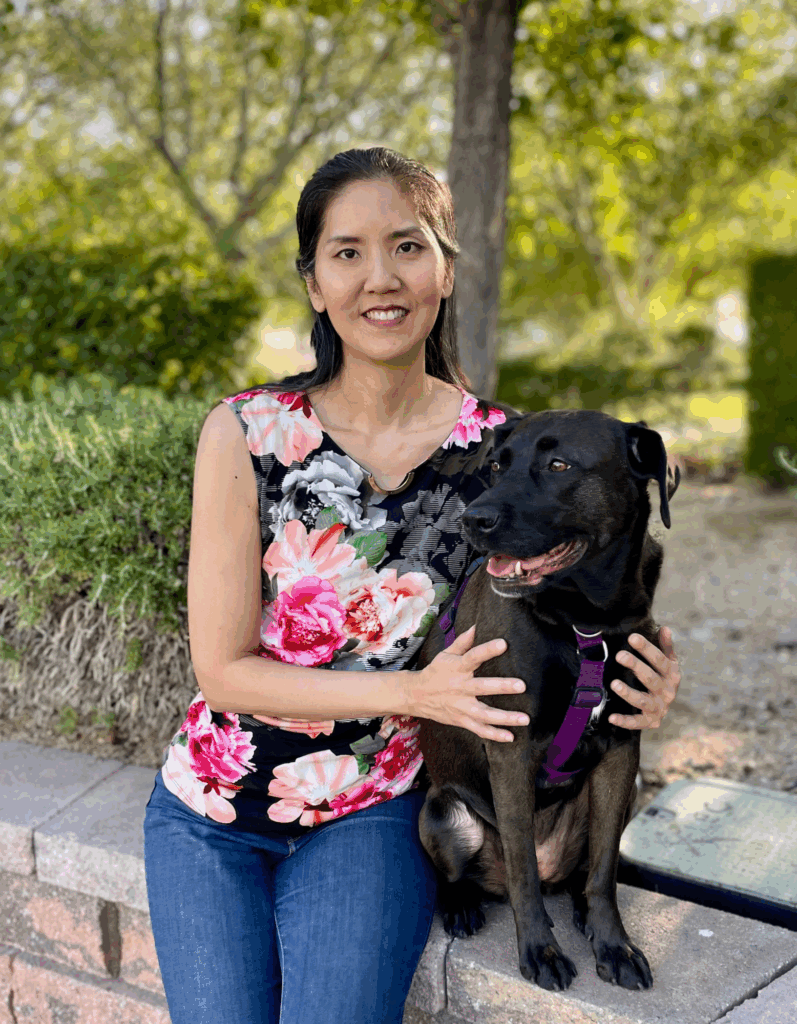
I work with accomplished professionals who have spent years being the steady one. The one who handles things. The one everyone else relies on. Many of the people I see are excellent at their jobs, respected in their communities, and quietly exhausted by how much effort it takes to maintain that image.
My approach draws on EMDR, CBT, ACT, and somatic work, chosen based on what your nervous system actually needs rather than a one-size-fits-all model. I hold a private pay practice by design. It means every session is built entirely around your goals, not around what an insurance company will approve, and it means I can offer the intensive formats, like Recent Trauma Intensives, that a standard weekly session structure doesn’t allow for.
I’m licensed to provide therapy across South Carolina by telehealth (TLC 1407 PC), so wherever you are in the state, from Charleston to Greenville to Columbia and everywhere between, we can work together without you needing to find time for a commute.
Trauma therapy is one part of the broader online therapy services offered in South Carolina available through my practice.
If you’d like to know more about my training and philosophy, visit Judy Wang, LCPC, CPC.
WHAT CHANGES
What life looks like on the other side
Healing from trauma doesn’t mean becoming a different person. It means becoming yourself without the armor. Clients typically describe the shift less as a dramatic transformation and more as a quiet return, the sense of finally hearing their own voice again after years of tuning it out for everyone else’s benefit.
You might notice you can sit through a difficult family conversation without your whole body bracing for it. You might catch yourself saying no without immediately over-explaining or apologizing for it. You might realize you went an entire visit home without needing three days afterward to recover. These aren’t small things. They’re what it feels like when your nervous system finally stops treating everyday life like a threat.
This doesn’t happen overnight and it isn’t about willpower. It’s about giving your brain the chance to finish processing what it never got to finish the first time. That’s the work we’d do together.
COMMON QUESTIONS
Frequently Asked Questions
No. Many of the people I work with have never used the word trauma to describe their experience, and that’s completely fine. If old patterns are shaping your present in ways that don’t feel good anymore, that’s reason enough to start.
Recent Trauma Intensive is a focused EMDR protocol for something that happened recently, generally within the last few weeks or months. If a recent event is still weighing on you, whether it’s an accident, a medical scare, or a sudden loss, Recent Trauma Intensive is designed to help before it settles into a longer-term pattern of anxiety or avoidance. If it’s been longer than a few months, standard EMDR is usually the better fit, and we can figure that out together during your consultation.
Yes. EMDR and Recent Trauma Intensive both translate well to telehealth, and for many of my clients, being in their own space actually makes the work feel safer and more accessible. Research supports the effectiveness of virtual EMDR when delivered by a trained clinician.
No, my practice is private pay only. This allows every session to be shaped entirely around your needs rather than what an insurance company deems medically necessary, and it protects your privacy since no diagnosis or treatment details are shared with a third party.
It depends on what you’re working through. Some clients see significant relief within a handful of sessions, particularly with Recent Trauma Intensive for a recent event. Others, especially those working through longstanding patterns, benefit from a longer course of care. We’ll talk through what makes sense for you during your consultation.
Schedule a free 20-minute consultation. We’ll talk through what’s bringing you in, answer any questions you have, and figure out together whether this is the right fit.
More questions? Visit my FAQs page.
You Do Not Have to Keep
Managing This Alone
The consultation is 20 minutes, no pressure and no commitment. Just a real conversation about what is actually going on.
WHERE I WORK IN SOUTH CAROLINA
Serving Professionals Across the State
All sessions are virtual and HIPAA-compliant. As long as you are physically in South Carolina during our time together, we can work together no matter which part of the state you call home.
Charleston
For professionals in the hospitality, legal and historic-preservation worlds where image and lineage carry real weight. A lot of Charleston clients grew up learning that composure was part of the family name, and that showing strain in public was not really an option.
Greenville
For the transplants and corporate professionals who moved here for banking, manufacturing or tech and found a city that is friendly on the surface and slower to actually let you in. Proving yourself in a new place takes a different kind of energy, and it adds up.
Columbia
For the government, legal and university professionals who have learned to watch what they say, read the political temperature of a room and manage their public image carefully. That constant calibration is its own kind of exhausting.
FROM THE BLOG
Resources for Anxious South Carolinians
by Judy Wang
Breaking the Cycle of People Pleasing
You might be asking yourself, “Why should I stop people pleasing? Isn’t it just being kind and helpful?”...
by Judy Wang
Parental Anxiety: Understanding and Managing Your Worries as a Parent
Key Takeaways
Parental anxiety is more than everyday worry.
Signs of parental anxiety include...
by Judy Wang
Relationship Anxiety: Symptoms, Causes & How to Break the Cycle
Anxiety can influence every corner of life, especially our relationships. While some anxiety is natural,...